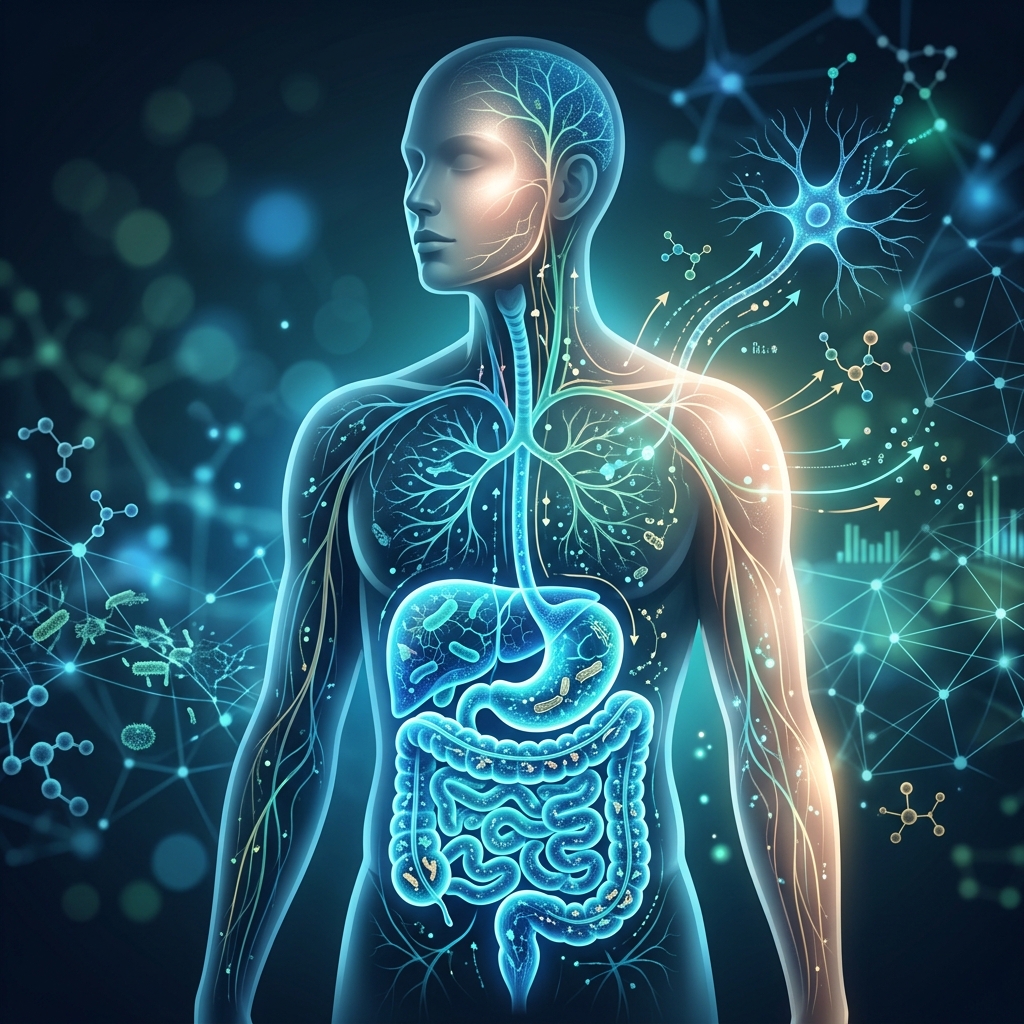
The idea that your diet affects your skin is not new — but the scientific mechanism behind it has only recently been elucidated. A comprehensive review published in Frontiers in Microbiology presents compelling evidence that the gut microbiome functions as a major regulator of the gut-skin axis — a bidirectional communication network linking intestinal health to cutaneous immunity, inflammation, and barrier function. What happens in your digestive system does not stay there; it manifests visibly on your skin.
What Is the Gut-Skin Axis?
The gut-skin axis describes the complex, bidirectional communication between the gastrointestinal tract and the skin, mediated through three primary pathways:
Immune modulation — approximately 70 percent of the body's immune cells reside in the gut-associated lymphoid tissue (GALT). Gut dysbiosis triggers systemic immune activation that manifests as cutaneous inflammation
Metabolite signaling — gut bacteria produce short-chain fatty acids (SCFAs), particularly butyrate and propionate, that have documented anti-inflammatory effects on distant organs including the skin
Intestinal permeability ("leaky gut") — disruption of the intestinal epithelial barrier allows bacterial endotoxins (lipopolysaccharides) to enter systemic circulation, triggering inflammatory cascades that directly affect skin conditions
Research-Documented Gut-Skin Connections
The review identifies specific, clinically validated associations:
Acne vulgaris — patients with acne show significantly altered gut microbiome composition compared to clear-skinned controls. Studies demonstrate reduced populations of Lactobacillus and Bifidobacterium species and increased intestinal permeability. Oral probiotics containing these species reduced acne lesion count by 20 to 40 percent in randomized controlled trials
Rosacea — a strong association exists between rosacea and small intestinal bacterial overgrowth (SIBO). Research shows that treating SIBO with rifaximin resulted in complete rosacea remission in 20 of 28 patients. The inflammatory pathways linking intestinal dysbiosis to facial erythema involve toll-like receptor activation and cathelicidin overexpression
Atopic dermatitis — reduced gut microbial diversity in the first year of life is a strong predictor of atopic dermatitis development. Clinical trials demonstrate that maternal and infant probiotic supplementation reduces eczema incidence by approximately 50 percent
Premature skin aging — chronic low-grade systemic inflammation driven by gut dysbiosis (inflammaging) accelerates dermal collagen degradation and impairs barrier repair
How to Support Your Gut for Better Skin
Consume prebiotic fiber daily — garlic, onions, asparagus, bananas, and oats feed beneficial Bifidobacterium and Lactobacillus populations that produce anti-inflammatory SCFAs
Eat fermented foods — yogurt (with live cultures), kefir, kimchi, sauerkraut, and kombucha introduce beneficial bacterial strains directly. Research shows daily fermented food consumption increases gut microbial diversity within 10 weeks
Reduce processed sugar and refined carbohydrates — high glycemic index diets promote intestinal inflammation and shift microbiome composition toward pro-inflammatory species
Consider targeted probiotics — Lactobacillus rhamnosus GG and Bifidobacterium lactis have the strongest clinical evidence for skin-related benefits
Manage stress — the gut-brain-skin axis means psychological stress disrupts gut motility and permeability, which in turn triggers skin inflammation via the mechanisms described above
Foods That Research Links to Better Skin
Omega-3 fatty acids (salmon, walnuts, flaxseed) — anti-inflammatory; reduce UV-induced erythema
Polyphenol-rich foods (green tea, berries, dark chocolate) — prebiotic effect promoting beneficial gut bacteria
Zinc-rich foods (pumpkin seeds, chickpeas, lentils) — essential for immune function and wound healing
Vitamin D sources (fortified foods, sunlight exposure) — modulates both gut and skin immune responses
"Clear skin starts in the gut. The research on the gut-skin axis has fundamentally changed our understanding of skin health — it is no longer just about what you put on your face, but about what you put in your body."
The Bottom Line
The gut-skin axis is not a fringe theory — it is a well-documented, peer-reviewed biological reality. Research consistently demonstrates that gut microbiome composition directly influences skin inflammation, barrier function, and visible aging. A holistic approach to skincare that includes dietary optimization, prebiotic and probiotic support, and stress management addresses root causes that topical products alone cannot reach.
Bioglow-AI takes a whole-body approach to skin health, incorporating lifestyle and nutritional factors alongside topical product recommendations for truly comprehensive skin optimization.
Reference: Salem, I., Ramser, A., Isham, N., & Ghannoum, M.A. (2018). "The gut microbiome as a major regulator of the gut-skin axis." Frontiers in Microbiology, 9, 1459. doi:10.3389/fmicb.2018.01459












Loading responses...